4 min read
Regulation. When we hear this word, we might imagine taking deep breaths, calming ourselves, easing off the brakes to come back to the moment. And while this absolutely is one way to regulate, there is also huge need to upregulate into action as well as down into calm. For instance when the body or mind struggles to find self motivation to do a task, this can create a cognitive internal battle. The good news is that regulation isn't about just calming down when we are heightened (hyperaroused), it's also a way to kickstart momentum when we are under-expressed or 'frozen' (hypoaroused) and finding a good enough middle ground when we experience both.
Regulation is not always about controlling or minimising, it's also about inspiring motion and reactivating. Whether you are overstimulated (stressed, angry, overwhelmed into panic) or understimulated (bored, lethargic, overwhelmed into a freeze state), hyperaroused or hypoaroused, there are big and small ways to return to a healthier baseline. Think of it like gears in a car. We can go up or down depending if you're moving or stopping. So much research goes into what can help when we are in dorsal vagal or sympathetic nervous system states (see image). It might come as a relief to hear that there are ways we can regulate preventatively as well as in the moment, particularly if you are neurodivergent or in a position of high responsibility - parents and carers, I see you.

We can feel dysregulated acutely, where something immediately triggers us to feel 'off', or dysregulated chronically, where ongoing stress or repeated pressure impacts the body on a somatic level. Biologically we are never in one state forever, despite how it feels in the moment. We naturally bounce between Sympathetic, Dorsal vagal and Ventral vagal. We are supposed to sometimes feel dysregulated, so that we can learn how to problem solve and adapt. And we are supposed to feel regulated, so we can experience calmness, enjoyment & connection.
But things like chronic stress can cause us to spend more time in one, rather than maintaining a healthy balance between all. If dysregulation continues the body begins to feel out of sync with its' own systems and can further shut down to protect itself, perpetuating the cycle of dysregulation. This is one reason for why we fall sick, burn out and experience body pain and illness.
So how can you regulate... and learn to notice dysregulation... with MTMG?
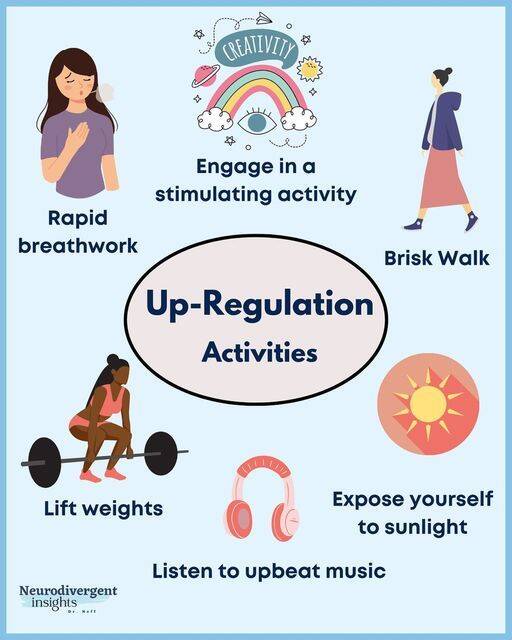

It's important not to force these nervous system shifts, but rather work with the body, discovering what feels good to your individual nervous system. With mtmg you can choose to join a session that predominantly upregulates, or predominantly downregulates. You can even try both. Once you start to feel the benefits of each practice, you might start to incorporate the techniques in your everyday life. Because regulation isn't just a 1 hour fix-all, it is a true tool for a more harmonious existence. A way to understand yourself better; to respond from that knowing and less from stress overload.
You can try a MIM session, which works with electronic music to regulate. These sessions first move the body into a parasympathetic state of presence and relaxation, then upregulates with dance to activate and uplift, influencing the nervous system into openness, connection and engagement. It is a predominantly upregulating practice as at its' core it's an aerobic workout, but always begins with a combi-regulating warm-up that includes activities from both activity lists above, such as tapping, breathwork, and bass heavy music that stimulates those feel good hormones through vibration.
In Restoration sessions those who might need a quiet hour and those experiencing burnout or overwhelm can come and reattune to where your body feels safe and calm. Through a method called Resourcing you can discover your own internal 'resources' (internal tools that send subliminal messages of safety and comfort) for pinpointing peace and stability within yourself. Restoration sessions include guided imagery, breathing, and calming music. The primary focus of these sessions is to slow down and let our body exhale again.
Whichever feels more suitable for you, check out services to find out more and book. And don't wait until session... take that exhale now.

Add comment
Comments