5 min read
The Movement Gap
The Movement Gap describes the space people fall into when stress, mental health challenges, and a culture that treats exercise as performance rather than play gradually disconnect them from regular physical activity. Western societies often frame movement as something you do to look good rather than feel good—and when life gets hard, movement is usually the first thing to go. The gap widens quietly: less motion, more stagnation, compounding effects on mood, cognition, and physical health.
MTMG exists to help bridge that gap—creating accessible, exploratory, and genuinely enjoyable spaces where people can reconnect with their bodies with less pressure or pretence.
Why the Gap Matters: Movement and the Mind
Physical activity doesn't just burn calories; it reshapes the brain. How?
Exercise triggers the release of brain-derived neurotrophic factor (BDNF), promotes neurogenesis in the hippocampus, and strengthens the prefrontal circuits responsible for attention, emotional regulation, and decision-making.
When movement drops out of daily life, so do these benefits. Sedentary behaviour is linked to reduced grey-matter volume, weaker executive function, and elevated risk of depression and anxiety. A 2025 population-based study found negligible cognitive protection in inactive groups—even when other lifestyle factors were controlled—highlighting how critical consistent movement is for long-term brain health.
Movement and ADHD
As an ADHD'er, I nosedive into research and can hyperfocus. Especially when I can understand and conceptualise it from the inside out. A February 2026 randomised clinical trial published in the World Journal of Paediatrics compared 12 weeks of integrated cognitive-motor exercise (movement paired with stop-go signals, rule-switching, and memory tasks) against standard aerobic exercise in 107 children with ADHD. Both groups saw reduced inattention and hyperactivity, but the integrated programme produced significantly greater improvements in inhibitory control and immediate working memory—core deficits in ADHD.
A 2025 fNIRS study found that unmedicated children with ADHD showed increased dorsolateral prefrontal cortex activation and better Stroop-task accuracy when allowed to move (desk-cycling) during the task—mirroring patterns seen in neurotypical peers. The authors suggest movement may partially replicate the attentional benefits of stimulant medication for some individuals.
Over the years, I myself have pinballed between trialling many medications. One constant, instantly available medicine that I have had no direct negative symptoms from truly is movement.
Movement and Brain Injury
In 2024 I was treated for the first time for cPTSD, a form of functional brain injury. Movement has been a life changer for me, and Neuroplasticity is the lifeline that helped me to even become a person who integrated movement into my lifestyle again. A 2022 systematic review in Frontiers in Psychiatry synthesised neuroimaging evidence across developmental disabilities, including acquired brain injury. Physical-activity and movement interventions were associated with normalised cortical arousal, improved executive-function activation patterns, and enhanced social-brain connectivity—effects measurable via EEG, fMRI, and fNIRS. The bulk of my own healing was fast tracked by a combination of somatics, neuroplasticity and then the act of being prescribed movement.
In so many spaces - ecstatic dances, movement workshops, starting as a beginner dancer again - I found myself feeling the difference in not only how my body felt but also in how much capacity I had to do what felt good, again and again, with less resistance, fear or restraint.
Takeaway
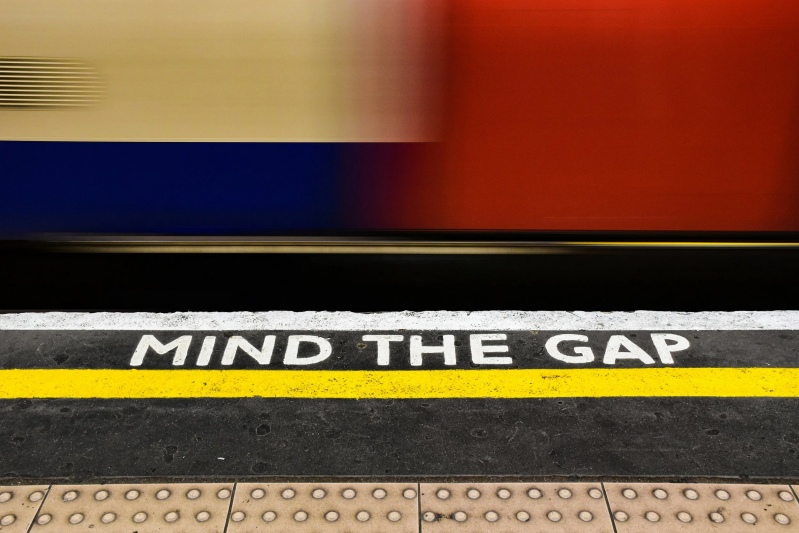
Mind the Movement Gap is a contemporary take on the UK's famous underground slogan. But here in so many parts of Britain we really do need to open our eyes. As someone with ADHD, I know first-hand how impactful movement can be. Movement is not a cure for ADHD or brain injury—but a growing body of research confirms it is a powerful, accessible lever for supporting attention, memory, emotional regulation, and neuroplasticity. The Movement Gap gives clues to what happens when that lever is deprioritised, understandably—and MTMG is one of many spaces designed to make movement joyful, inclusive, and part of life again.
Add comment
Comments